What Does Cassadaga Mean? Tracing the Name
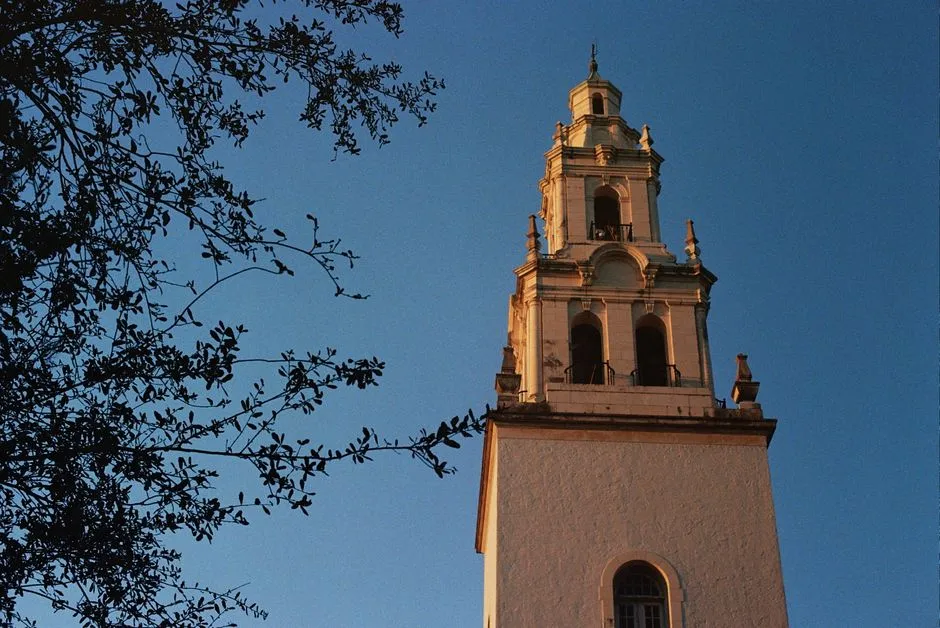
What does Cassadaga mean?
Cassadaga is commonly explained as a Seneca place name meaning "water beneath the rocks," the wording used in the New York village's comprehensive plan. Florida's community borrowed its name through New York Spiritualist connections. Historical sources use different English translations, so the familiar phrase should be attributed rather than presented as a word-for-word linguistic analysis.
There are two questions inside that short answer: what the older name meant, and why people chose it for a community in Florida. A source can explain the second without settling the first. Reading those questions separately produces a more useful history than attaching one picturesque translation to every appearance of the name.
What wording do the name sources actually use?
The Village of Cassadaga's 2021–2025 comprehensive plan, page 17, supplies the opening translation. Its heritage passage gives an English explanation, without a breakdown of the Seneca word, a speaker's recorded pronunciation or a linguistic derivation.
An older record is more compressed. The U.S. Geological Survey's Bulletin 197, published in 1902, lists Cassadaga as a lake, creek and village in Chautauqua County, New York. Its entry gives the meaning as "under the rocks." That entry documents an earlier published gloss: a short explanation of a word's meaning. It does not include the word water in its English rendering.
The difference deserves to remain visible. Adding an attractive detail to an old quotation changes what that source said, even when a later source includes the detail.
| Record | Wording or connection it supplies | What that establishes |
|---|---|---|
| New York village plan | "water beneath the rocks" | The village's stated heritage explanation |
| USGS Bulletin 197 | "under the rocks" | An earlier published English gloss |
| Florida historic-district nomination | Naming in honor of the New York Spiritualist community | A documented account of the name's transfer |
The table compares the records; it does not rank their authors as authorities on Seneca grammar. Nor does a shorter translation automatically make the longer one wrong. It tells us where further linguistic evidence would be needed.
Why did the name travel to Florida?
The historic-district nomination held by the National Park Service, section 8, pages 2–3, connects the Florida naming to the New York Spiritualist center. Its account describes Marion Skidmore's northern connection and the organizing of a southern community in 1894.
This also explains why a search moves between Florida and New York. The recurrence of the name belongs to the story; it is not necessarily a search-engine mistake. Keep the state attached when taking notes, especially if a source discusses lakes, a village, a camp or an association without repeating the location in every paragraph.
Use a historical record for the question it can answer. Current visitor arrangements require current information from the responsible organization.
Where do the Cassadaga Lakes and Lily Dale fit?
In Robin Mimna's local history account, the more specific naming story credits Skidmore with choosing the name after the Cassadaga Lakes near Lily Dale. The account describes early participants' connections with that New York Spiritualist community. It renders the name in terms of underwater rocks, another reason to avoid quietly merging different English explanations into one supposedly exact quotation.
Treat that as an attributed historical account, with its own level of detail. The preservation nomination establishes the broader New York connection; the local account supplies the lake reference and personal attribution. Those statements fit together, but they are not interchangeable citations.
For a family-history note or a caption, record which source supports each part. If you write that a particular person proposed the name, attach the source that actually makes that attribution. A document mentioning that person elsewhere is not enough.
Can these records settle the Seneca etymology?
They establish published explanations and a historical naming connection. They do not, by themselves, amount to a full linguistic analysis. Etymology is an account of a word's origin and development; a translated phrase is only one possible piece of that account.
The Seneca Nation's language department describes active language teaching, learning resources and translation services. That is an appropriate starting point for identifying qualified language expertise. Its programme page is not a Cassadaga dictionary entry, and this article does not attribute any translation of Cassadaga to the Nation.
A place-name article should make that distinction explicit. The presence of a Seneca-language resource in a source list cannot turn somebody else's English gloss into a translation approved by Seneca speakers. We have not obtained such a review and do not supply an invented pronunciation or divide the name into guessed word parts.
How could you investigate the name further?
The Smithsonian's collection highlights describe digitized Seneca language manuscripts, including vocabularies, field notes and sound recordings. This identifies a research collection; it does not establish that a particular Cassadaga entry exists within it. Finding a relevant item would require examining its description, text and provenance, meaning who created it and in what circumstances.
For the Spiritualist connection, Lily Dale's own history page identifies museum holdings of newspapers, magazines and pamphlets. It also describes the Marion H. Skidmore Library as a non-circulating research library and directs researchers to arrange access with its librarian. Check current arrangements before planning research travel; an online collection description is not an appointment.
Our suggested research log has separate spaces for the exact wording, the place being discussed, the document date, the author or institution, and the conclusion the passage can support. Keep your own inference in a different field. That makes it possible to revisit a conclusion without losing the evidence beneath it.
What should you take from the name when visiting?
A good historical question to bring is how ideas and community names moved between places. Ask a guide which records support a naming account, and note when the answer is a local tradition rather than a cited document. A respectful question can be precise without demanding that a guide resolve an entire linguistic debate.
For practical activity choices, use our Cassadaga visit planner. Broader history and context and visit-planning articles keep the historical question connected to the trip without turning this name explanation into a timetable.
The useful conclusion is bounded: the familiar translation has a traceable published source, and the Florida name has a documented northern connection. Keeping the wording and the borrowing separate lets both parts of the story remain specific.
Sources
- Village of Cassadaga: comprehensive plan, page 17.
- USGS: Bulletin 197, Cassadaga entry.
- National Register nomination: section 8, pages 2–3.
- Robin Mimna: Spirits of Cassadaga.
- Seneca Nation: language departments.
- Smithsonian: selected Seneca language manuscripts.
- Lily Dale: museum and library history resources.